Sunday, 26 June 2022

What Makes Zero Trust Better And Different From Traditional Security

What Makes Zero Trust Better And Different From Traditional Security

Enterprises have already started to embrace zero trust security over traditional security since it offers improved security while simultaneously improving flexibility and reducing complexity. Here’s how zero trust outperforms the traditional model:

Network access

Zero trust security enables users to connect with in-house applications securely. They can get these applications without exposing them to the internet or gaining network access.

On the other hand, traditional security uses the castle and moat concept (everyone inside the network is trusted by default). The user finds it difficult to access the applications from outside and is bound to trust everyone in the network. The problem here is that if a hacker poses as an insider, they get access to everything available within the network.

User identities

Zero trust security accepts no trust units before it awards the user admittance to anything. It also checks other forms of data before giving access to the client. In short, this security model pays heed to who the user is. So, it confirms the user’s identity every time the latter asks for security access.

Traditional security works on an entirely different principle as compared to zero trust. It gives value to where the user is coming from in the network. It utilizes the trust system because the client’s IP address or area characterizes the user identity in the system.

Modern techniques and technologies

Zero trust security tends to the concerns of cloud-facilitated data to re-examine a secure network plan. It solves these issues by accepting that everything is reliable. It grants trust only after the verification and authorization process.

However, traditional security lacks the modern techniques and technologies to monitor a network plan. The lack of these tools and services may compromise the system of the cloud-facilitated data, applications, and users.

What are the Benefits of Zero Trust Security?

Here is how zero trust benefits over traditional security:

  • It helps users gain better visibility across networks and enterprises.
  • It simplifies IT management through continual monitoring and analysis.
  • It enables the security system to work smarter by utilizing the central monitoring functions.
  • It ensures better data protection for networks, applications, and users.
  • It helps secure the remote workforce of an organization by considering identity as the perimeter.
  • It works on automation that enables the user to gain access to everything quickly.
  • It ensures continuous compliance with each access request through evaluation.

Final Thoughts

Zero trust security depends on the possibility that a business must have a default trust option for any element that crosses its border. It verifies anything that attempts to associate with or access the framework. A zero-trust network is different from regular VPNs and firewalls, as it secures access to all applications within an enterprise. Additionally, zero trust replaces traditional security technologies by offering better authentication methods.

So when it comes to taking digital transformation initiatives, proactive protection is required in this new decade. Therefore, a wise move for enterprises will be to implement zero-trust security.


Originally Published at Hackernoon

What Makes Zero Trust Better And Different From Traditional Security | HackerNoon
Traditional vs zero trust? Learn how zero trust outperforms the traditional model by delivering improved security, flexibility and reduced complexity.
What Makes Zero Trust Better And Different From Traditional Security

https://bit.ly/3xVwIbZ
https://bit.ly/3a0YZ8O

https://guptadeepak.com/content/images/2022/06/photo-1441804238730-210ce1c2cc00.webp
https://guptadeepak.weebly.com/deepak-gupta/what-makes-zero-trust-better-and-different-from-traditional-security


Monday, 13 June 2022

Top 7 Google Drive Security Mistakes Companies Keep Making

Top 7 Google Drive Security Mistakes Companies Keep Making

You've likely had to work with a file stored on Google Drive at some point in your career. This can be a gift and a curse for you. Sharing essential documents, files, and applications is great for streamlining your workflow.

But, it may not be the most secure option available to you when it comes to account security. Google Drive is a file storage and synchronization service created by Google. Users can store files in the cloud, share files, and edit documents, spreadsheets, and presentations with collaborators.

It's no surprise why it's so popular: It's free, easy to use, and accessible anywhere. But did you know that hackers are targeting Google Drive users?

By password guessing, compromising weak passwords, or phishing campaigns, bad actors gain access to business documents such as intellectual property, financial records, and personally identifiable information (PII) stored on Google Drive.

There are a lot of factors at play when it comes to securing Google Drive's data. This means that security mistakes made near the source of the data like Google Drive tend to be repeated by other companies.

In this post, we'll be outlining seven Google Drive security mistakes that companies across industries are currently making.

Top 7 Google Drive Security Mistakes Companies Keep Making

Cloud data security is a critical consideration for companies moving to the cloud. But even as companies do more with Google Drive, many are still making mistakes that put their data at risk.

We've gathered the top seven Google Drive security mistakes companies make and how to avoid them.

The First Mistake: Using G Suite without Two-Step Verification

Two-step verification is your first line of defense against cyber threats. It works alongside your password to add an extra layer of account protection. You're alerted whenever someone attempts to sign in to your account from an unrecognized device or browser.

To protect users' accounts with two-step verification, go to the Google Admin console and select Security > Set up single sign-on (SSO) with a third party IDP > 2-Step Verification.

Ensure that every employee has enabled two-step verification in their accounts. The same risks apply when an employee accesses their work device or uses their work account on a personal device.

The best way to keep both business and personal accounts safe is for employees to turn on two-step verification for all the accounts they use on their devices.

Second Mistake: Google Files/Folders Should Be Shared Carefully:

If you use Google Drive for work, the chances are that you share some files with your colleagues. But what if you mistakenly share a file with the wrong person? Or does someone leaves your organization but still have access to sensitive documents?

You should frequently audit the shared documents and make it a policy that employees remove any files they no longer need access to. This will prevent any accidental data leakages.

Third Mistake: Not Using Google Vault

Google Vault is a tool that helps organizations manage, retain, search and audit their email, Google Drive files, and on-the-record chats.

It's an essential component of any security strategy, enabling you to detect and investigate the threats you face. If you're not already using Google Vault, find out how it works and start today.

Fourth Mistake: Not Protecting Your Data before Sharing It

The ability to easily share files is one of the benefits of Google Drive. But sharing can also be a security risk. By default, anyone with whom you share a file can edit it, comment on it or share it with others (including people outside your organization).

Take care when sharing files by setting appropriate permissions for each file and folder. For example, if you only want to allow viewing or commenting on a file, don't share it with "can edit" permissions. You can also protect files before transferring them by setting an expiration date or requiring a password to open them.

Fifth Mistake: Not Training Your Employees

Most employees don't understand the risks of using cloud services. Most don't realize that putting sensitive information in cloud services exposes you to more trouble than using an on-premises solution.

This is especially true of millennial employees, who have grown up with the internet and social media and are used to sharing photos, videos, and content online.

Sixth Mistake: Frequently Audit Shared Documents

Another mistake that companies make while using Google Drive is not auditing shared documents from time to time.

Google provides an easy-to-use interface that lets you see who has access to files and folders. You can easily see what type of permission each user has—whether they can only view or comment on a file or whether they can edit it as well.

It is imperative to audit shared documents from time to time because there are chances that some users might have left your company and are still able to access some sensitive documents stored on Google Drive.

Seventh Mistake: Google Drive Is Not For Sensitive File

This may seem obvious, but many people still don't get it. When you share a file through Google Drive, it's available for anyone with access to that drive to see it — even if you didn't intend for them to do so.

Even if you delete the file from your own Google Drive folder, it could still be accessible through another user's account if they downloaded a copy and saved it to their own Google Drive folder.

This means that confidential information could easily be leaked or stolen by an unauthorized person who has access to someone else's account or computer.

Bottom Line

Google Drive contains the stuff businesses hold most dear - their documents and data. But despite this, many companies are repeatedly making the same mistakes with their files. Each of the above errors is a common faux pas that every company should avoid to ensure that their business documents are protected as much as possible.

Google Drive's security benefit is an invaluable investment for companies that take their data security seriously. Successful implementation of Google Drive into a business requires strict security practices and strategies, including employee training on best practices for protecting files.

Given the massive amounts of files stored, this isn't an easy task, but that doesn't mean it isn't essential. Hopefully, these tips will help you keep your data safe. We hope that all companies will take these security measures seriously and act immediately so they do not become another victim of one of these situations.

So if you own a business or are a personal user who has sensitive information on your account, we urge you to start protecting your data by avoiding the mistakes above.


https://bit.ly/3xIH3sS
https://bit.ly/3aQijpt

https://guptadeepak.com/content/images/2022/04/AdobeStock_361331208_Editorial_Use_Only.jpeg
https://guptadeepak.weebly.com/deepak-gupta/top-7-google-drive-security-mistakes-companies-keep-making

Monday, 6 June 2022

Should Artificial intelligence (AI) Be Regulated?

Should Artificial intelligence (AI) Be Regulated?

Artificial intelligence combines the elements of computer science and engineering to build intelligent computer programs that help solve global problems. AI works by classifying large volumes of data into actionable information through complex algorithms. Although some have argued that the application of AI is still at its infant stage, its application is already being seen across multiple sectors. For instance, in recent years, AI application has been witnessed in creating expert systems, speech recognition, natural language processing, and machine learning.

AI's potential application across multiple sectors has raised the demand for its use and brought great optimism regarding its ability to provide substantial improvements in working processes and possibly enhance human work. Its far-reaching application has fueled an explosion in its adoption across many sectors. For instance, in the health sector, experts have continued to test and apply various aspects of AI in the performance of administrative duties, documentation, patient monitoring, medical device automation, and image analysis.

Artificial Intelligence (AI) Regulation Debate

The surge in the adoption of AI has sparked heated debate regarding the correctness of introducing regulations that govern its use and application. Proponents of AI regulation have argued that, if unregulated, there was a high likelihood that AI could work against humanity instead of being applied for greater prosperity. One such proponent of regulation is Microsoft Chairman Bill Gates. He has been quoted raising concerns about "superintelligence" and expressing his lack of understanding about why others would not be concerned about the issue. Gates equated failing to regulate Artificial Intelligence to "Summoning the demon." Proponents across the spectrum have continuously made a case for the regulation of AI. There is no telling the lengths to which designers of these technologies could use anonymous data to drive their agenda or for their gain.

However, opponents of AI regulation have continued to call for the deregulation of AI, stating that it would be impossible to regulate all aspects of AI that affect human life. In their argument, they make a case that lawmakers have generally been unsuccessful, in the past, at regulating digital technologies. Opponents of AI regulation argue that a regulatory regime that aims to deal with all uses of Artificial Intelligence technology would be comprehensive in scope. In this regard, it would not make sense to apply the same regulatory regime in facial recognition software as to smart refrigerators, which make grocery orders based on consumer patterns. Instead, however, opponents of regulation propose a strategy whereby issues regarding the use of AI would be approached incrementally, and a regulatory framework adopted based on the issues of concern at that time.

Opponents of regulation have equally argued that regulating AI technologies could stifle growth hence reducing the prospects of it ever achieving its full potential.  AI technology experts such as Alex Loizou have actively opposed any form of regulation of AI before it can be fully understood. As a solution, he has called legislators first to give the technology time to flourish and evolve. All players have a good understanding of it before discussing ways of regulating it.

Emerging Issues regarding Unregulated AI

At the core of the debate on whether to regulate or not to regulate AI is that this technology relies on its large volumes of data. Proponents of regulation have argued that since data is not tangible property, it could be misused if it fell into the wrong hands. This data can interfere with individual privacy rights, database rights, copyright, and confidentiality rights in many ways. Already, there are several instances of AI applications gone awry, leading to severe violations against the victims.

According to an article by "The Guardian", the application of AI has not always yielded the desired outcomes. For instance, an overreliance on AI use in facial recognition systems led to more than 1,000 airline travelers flagging. In one case, an American Airline Pilot faced detention at least 80 times during his work since his name resembled that of a terrorist leader. In another instance, black contestants in a beauty contest were denied any win since the AI technology used to pick out winners had been trained predominantly on white women

Regulatory Response to Unregulated AI

The European Union is one such organization that has been quick to regulate AI use and its application to protect its member states from specific harmful AI-enabled practices. In its newest proposal, the European Union proposes to regulate the digital sector through the General Data Protection Regulation (the GDPR), the proposed Digital Services Act, and the proposed Data Governance Act. In the GDPR, the EU regulation introduces a four-tier system of risk to allow or prohibit the use of AI. AI regulation in the EU generally classifies AI systems as prohibited AI or Highly regulated AI. Regulation deems AI as Highly Regulated AI ("high-risk") if they pose a high risk to human beings' health and safety or fundamental rights.

Prohibited AI Systems are deemed as such if they contravene EU values or present an unacceptable risk to the fundamental rights of its citizens. It is noteworthy that the recommendations proposed in the regulation stem from the understanding that some algorithms deployed in AI applications have the potential to have direct consequences on people's lives and affect their decisions. For instance, AI is now being used to diagnose medical conditions, approve loans, select candidates for shortlisting, and recommend court penalties. In such cases, as in many other cases, the impact of AI use is enormous; hence this makes regulation imperative.

In regulating AI, the EU hopes to:

  • Establish, implement, document, and maintain a risk management system.
  • Establish transparency and information to end-users of AI technologies
  • Provide a framework for data management and governance
  • Ensure that AI systems undergo a conformity assessment procedure before releasing to the market.
  • Promptly correct issues regarding AI system non-compliance with existing AI regulation

Benefits of Regulating AI

It is perhaps not in doubt that regulation of AI creates a sense of confidence in the AI technologies being developed, perhaps because regulation helps safeguard and protect fundamental human rights. It is noteworthy that the use of AI has, in several instances, been seen to breach the rights of individuals on the grounds of race, religion, and sex. Regulation of AI is estimated to bring fairness and reason in the design of technologies that work towards improving the lives of human beings.

It is equally noteworthy that regulation helps ensure that infringements on fundamental human rights are kept at bay during the application of AI across sectors. For example, regulation may protect victims using the criminal justice system, making their sentencing solely based on machine learning. Regulation may, in this effect, help ensure that bad decisions made by machines are not used to deny defendants their fundamental rights. Regulation may also ensure that individuals are protected from unlawful detention based on a flawed facial recognition system. In the long-term, it is estimated that such frameworks will help create a platform for creating accountable AI systems that are above reproach and protect users and the general public from misuse or mishandling of their data to deny them their fundamental rights.

Should AI be Regulated or Not?

It is perhaps apparent that Artificial Intelligence technologies affect almost all spheres of our lives. AI use can improve our lives in ways that we never deemed possible through explaining the reasoning behind certain decisions or events, accurate prediction, and lessening human workload. However, it is equally noteworthy that the use of AI technologies can disrupt human existence and infringe on their fundamental rights. Thus, it is perhaps more reasonable to suggest that AI technologies be regulated to minimize risk to the fundamental human rights of all users. However, regulation should be approached in such a manner that makes sense and does not discourage using these technologies. In this regard, the law should create an enabling framework for responsible AI use that is conscious of the risks involved in applying AI technologies. In the long-term, it is anticipated that this approach will help safeguard both innovators engaged in the design and rollout of these technologies and their end-users.


https://bit.ly/3Q0rSSN
https://bit.ly/3Q5E70k

https://guptadeepak.com/content/images/2022/04/AdobeStock_318111476-1.jpeg
https://guptadeepak.weebly.com/deepak-gupta/should-artificial-intelligence-ai-be-regulated

Monday, 30 May 2022

11 Tips for Keeping Information Safe on the Internet

11 Tips for Keeping Information Safe on the Internet

The internet brings with it a host of fun-filled activities and access to information that we could never have dreamt of just a decade ago. While the internet today is a wonderful resource, it is essential to remember that it can also be hazardous, especially if you have children who are "researching" while you are not watching.

There is no shortage of risks at home, at school, or at work. From inappropriate content to malicious sites and more, there are numerous risks. This blog will look at a few online safety tips to help you keep your personal details, private photos, and videos safe on the internet and off the internet, too.

Keep Personal Data Private and Limited

Potential employers or consumers do not require your personal or financial information. They must be aware of your skills and professional experience and how to contact you. You wouldn't dish out your personal details to strangers, so why give it out to countless, nameless people online?

Make Strong and Secure Passwords

When creating passwords, think of past phrases or figures that a malicious actor might easily decipher, such as your birthdate or your family members' names. Change the uppercase and lowercase letters, digits, and characters regularly.

For internet safety, it's also a good idea to generate distinct and strong passwords rather than using the same password on different sites - a password vault or password manager application can help maintain a record of this.

Be Cautious When Browsing Online

You wouldn't venture into a risky area in real life, so don't go online and visit unsecured websites. Identity thieves often utilize lurid information as bait. They realize netizens are occasionally attracted and curious about questionable content and may possibly lay their guard down when searching for it.

The underbelly of the internet is fraught with unknown dangers - a single thoughtless click could potentially reveal personal information and sensitive data or contaminate your gadget with viruses. You don't even offer the online predators a chance to gain access to your sensitive information if you resist the desire.

Two-Step Authentication is a Must

Large, reputable organizations such as PayPal, Facebook, Google, and others utilize two-step verification, requiring users to sign in using a code texted to their cellphones.

Other organizations may want your cellphone number or an alternate email account so that if they detect any suspicious activity or someone tries to access the account from other devices, you will receive a message requesting extra verification.

Be Wary of What You Share

The internet server doesn't have a true delete feature. Because eliminating the original doesn't really erase any copies generated by others, any comment or picture you post online may remain online indefinitely.

You can't "claim back" a comment you might regret posting or delete an awkward selfie you clicked at a party. To stay safe online, post nothing on the internet that you'd never want your mother or a future employer to see.

Use Prudence When Using Free Wi-Fi

No one ever said that a tad bit of online shopping was bad, or did someone? Any free public Wi-Fi network that you may use for making online purchases will have insufficient internet safety protections in place; other people on the same internet connection could readily see what you're doing.

Before pulling out your credit card, be sure you're at home, connected to a safe, password-protected virtual private network, and have antivirus software installed.

Examine Your Bank's and Creditor's Protection Measures

There is no such thing as universal internet safety and protection regarding online activities. If you shop online or do any business on the internet, ensure your bank or credit institutions have procedures designed to safeguard you in the event of online scams and identity theft. If your account has been hacked and exploited, you don't want to self-insure.

Furthermore, never enable your browser or web pages to remember your bank account information, for this is a sure-fire way to end up in trouble.

Take Caution When Meeting People Online

Individuals you connect with on social media platforms or meet online aren't always who they say they are. It's possible that they're not even real. Forged online accounts are a convenient method for hackers to snuggle up to naive internet users and empty their online wallets.

To prevent a data breach, maintain the same level of caution and common sense in your internet community life as in your offline social life.

Keep an Eye Out for Connections and Attachments

Online criminals and hackers are quite crafty. Their phishing scams are usually disguised as messages from an institution, power company, or other business. Specific characteristics, such as misspellings or an unusual email account, can indicate that the message is from malicious software.

Drive Wiping and Factory Reset

Frequently, just "deleting" anything from your computer or mobile device or clearing your browsing history does not result in the information being permanently removed from the gadget. When you resell or discard your old desktop computers or mobile devices, ensure the drives or cloud storage are thoroughly cleaned and the system is the factory reset.

Seek Information and Examine the Fine Print

Web browsers must understand that safeguarding personal information is a shared duty among themselves and their organizations. Customers should read and examine the security measures of the web pages to understand how and why the site/platform will utilize their personal information.

As a result, businesses should have well-documented privacy rules and standards in place and the ability to resolve any issues that arise correctly.

Bottom Line

As the internet has become a part of our daily lives, so have its insecurities. Safely Surfing the web and following healthy internet habits doesn't just mean being careful what you click. It means understanding how to protect your identity and ensure that your personal information online doesn't fall into the wrong hands.

Before signing off, the most important thing to remember is that, while the internet is a fantastic resource, it is not a substitute for real-life connections. So make sure to stay safe online and offline by being smart, using the internet safety tips mentioned above, and knowing how to get help if you need it.


https://bit.ly/3NFoB9y
https://bit.ly/3lYJWyQ

https://guptadeepak.com/content/images/2022/04/AdobeStock_303353368.jpeg
https://guptadeepak.weebly.com/deepak-gupta/11-tips-for-keeping-information-safe-on-the-internet

Friday, 29 April 2022

Will Decentralized Auth Change the Perception of Consumer Identities in 2022?

Introduction

Will Decentralized Auth Change the Perception of Consumer Identities in 2022?

Every day, we encounter various events where we need to verify our identities. Whether you’re applying for a loan, booking flight tickets, or signing up online for a service, identity verification is crucial.

However, most conventional authentication processes are inconvenient and even threaten consumers’ details.

Whether we talk about inappropriate data collection and storage or a loophole in managing consumer identities, anything could lead to compromised sensitive information.

Here’s where the concept of decentralized authentication in identity management comes into play.

Storing essential information like name, address, and credit card details at a centralized location could mitigate the risk of identity disclosure or a breach of privacy.

Let’s understand how decentralized authentication paves the path for a secure and seamless authentication process across multiple platforms in 2022 and beyond.

What is Decentralized Authentication?

Decentralized authentication means no central authority is required to verify your identity, i.e., decentralized identifiers. DIDs (Decentralized Identifiers) are unique identifiers that allow for decentralized, verified digital identification.

A DID any subject identified by the DID's controller (e.g., a person, organization, thing, data model, abstract entity, etc.).

DIDs, unlike traditional federated identifiers, are designed to be independent of centralized registries, identity providers, and certificate authorities.

How is Decentralized Authentication Used?

Let’s understand this with a simple example. If someone creates a couple of personal and public keys in an identification wallet, the public key (identifier) is hashed and saved immutably in an ITF.

A dependent third party then proves the person's identification and certifies it by signing with its non-public key.

If the person desires to get admission to a carrier, it's sufficient to give its identifier within the shape of a QR code or inside a token. The provider company verifies the identification to evaluate the hash values of identifiers with their corresponding hash facts within the ITF. The certification report is likewise saved within the ITF.

If they match, admission is granted. In greater ideal scenarios, the person can derive separate key pairs from a non-public key to generate different identifiers for one-of-a-kind relationships to allow privacy-pleasant protocols.

Will Decentralized Auth Change the Perception of Consumer Identities in 2022?

Benefits of Decentralized Authentication

Both government and private sectors are already leveraging the true potential of decentralized authentication to deliver a seamless and secure user experience to their clients.

The growing use of decentralized identity eventually eliminates the need for storing user credentials on several websites, which further reduces the risk of identity theft.

Here are some business advantages of incorporating decentralized authentication:

  • It helps establish trust in a customer since identity frauds are reduced, and there is a negligible risk of identity theft.
  • Personally identifiable information of customers is secured and adequate security for other sensitive information like credit card details or medical information.
  • Efficient and quick verification of the authenticity of data by third-party.
  • Reduced vulnerability to information misuse via the ones charged with coping with it and cyberattacks, fraud, and different monetary crimes.
  • Give clients extra comfort via putting off passwords for login and continuous authentication.
  • Generate remarkable degrees of human acceptance as accurate among the corporation and its customers and companions.
  • Reduce the compliance burden of dealing with clients' private information in services.
  • Allow participation in open, trustworthy, interoperable standards.

The Bottom Line

The modern technological ecosystem has offered endless possibilities to build a better and safer future with more robust control over our individual privacy.

Decentralized authentication can be the game-changer in mitigating the risks of identity theft in both the government and private sectors. Organizations thinking of enhancing consumer information security should strictly put their best foot forward to incorporate decentralized authentication for a secure experience.


Originally Published at LoginRadius

Decentralized Authentication -The Future of Authentication | LoginRadius Blog
Decentralized authentication is shaping the future of securing consumer identities. Here’s how decentralized authentication benefits diverse businesses.
Will Decentralized Auth Change the Perception of Consumer Identities in 2022?

https://bit.ly/3KuMqPi
https://bit.ly/3kueist

https://guptadeepak.com/content/images/2022/03/dec-auth.jpg
https://guptadeepak.weebly.com/deepak-gupta/will-decentralized-auth-change-the-perception-of-consumer-identities-in-2022

Thursday, 28 April 2022

Is the Rise of Machine Identity Posing a Threat to Enterprise Security?

Is the Rise of Machine Identity Posing a Threat to Enterprise Security?

We're in an era where the number of machine identities has already surpassed the number of human identities, which isn’t something that should be ignored from a security perspective.

Whether we talk about an IoT ecosystem containing millions of interconnected devices or application programs continuously seeking access to crucial data from devices and other apps, machine identity security is swiftly becoming the need of the hour.

What’s more worrisome is that cybercriminals are always on the hunt to exploit a loophole in the overall security mechanism in the digital world where machine-to-machine communication is the new normal.

Hence, it’s no longer enough to reassure or assume services/devices accessing sensitive data can be trusted since a breach or sneak into the network in real-time processing can go undetected for months or even years, causing losses worth millions of dollars.

Here’s where the critical role of machine-to-machine (M2M) authorization comes into play.

Let’s understand how M2M authentication works and paves the path for the secure machine to machine and machine to application interactions without human interventions.

What is Machine Identity? Why Does Security Matter Now More than Ever?

Just like humans have a unique identity and characteristics that define a particular individual, machines have their identities that help govern the integrity and confidentiality of information between different systems.

Machines leverage keys and certificates to assure their unique identities while accessing information or gaining access to specific applications or devices.

Today, business systems undergo complex interactions and communicate autonomously to execute business functions. Every day, millions of devices constantly gather and report data, especially concerning the Internet of Things (IoT) ecosystem, which doesn’t even require human intervention.

However, adding stringent layers of security isn’t a piece of cake at such a micro-level. Hence, cybercriminals are always looking for a loophole to sneak into a network and exploit crucial information.

Hence, these systems need to efficiently and securely share this data during transit to the suitable systems and issue operational instructions without room for tampering.

A robust machine-to-machine (M2M) communication mechanism can be a game-changer concerning the ever-increasing security risks and challenges.

What is Machine-to-Machine Authorization?

Machine-to-machine (M2M) authorization ensures that business systems communicate autonomously without human intervention and access the needed information through granular-level access.

M2M Authorization is exclusively used for scenarios in which a business system authenticates and authorizes a service rather than a user.

M2M Authorization provides remote systems with secure access to information. Using M2M Authorization, business systems can communicate autonomously and execute business functions based on predefined authorization.

Is the Rise of Machine Identity Posing a Threat to Enterprise Security?

Why Do Businesses Need M2M Authorization?

Since we’re now relying on smart interconnected devices more than ever before, secure data transfer is undeniably a massive challenge for businesses and vendors offering smart devices and applications.

Moreover, these smart devices and applications continuously demand access from other devices and applications, which doesn’t involve any humans; the underlying risks and security threats increase.

IT leaders and information security professionals can’t keep an eye on things at this micro-level, which is perhaps the reason why there’s an immediate need for a robust mechanism that can handle machine-to-machine communication and ensure the highest level of security.

Apart from this, businesses also need to focus on improving the overall user experience since adding stringent layers of security eventually hampers user experience.

Here’s where a reliable CIAM (consumer identity and access management) solution like LoginRadius comes into play.

How LoginRadius’ Cutting-Edge CIAM Offers Seamless M2M Authorization?

LoginRadius M2M helps businesses to provide flexible machine-to-machine communication while ensuring granular access, authorization, and security requirements are enforced.

LoginRadius’ M2M Authorization offers secure access to improve business efficiency and ultimately enhances customer experience. M2M provides several business benefits, including, but not limited to:

  • Seamless user experience backed with robust security
  • Efficient authentication and data exchange
  • Grant, limit, or block access permissions at any time
  • Secure data access across multiple business systems
  • Granular data access with predefined scopes

Final Thoughts

With the rise of smart devices, the rising threat of machine identity theft is increasing among developers and vendors offering these services.

Organizations need to understand the complexity of the situation and put their best efforts into incorporating a smart security mechanism that can carry out machine-to-machine authorization tasks like a breeze.

LoginRadius’ cutting-edge CIAM offers the best-in-class M2M authorization that helps businesses grow without compromising overall security.


Originally Published at LoginRadius

The Rise of Machine Identity & the Role of M2M Authorization | LoginRadius Blog
Machine identity thefts and security breaches aren’t uncommon these days. Learn how machine-to-machine authorization mitigates cybersecurity risks.
Is the Rise of Machine Identity Posing a Threat to Enterprise Security?

https://bit.ly/3LzvybO
https://bit.ly/37ShPxZ

https://guptadeepak.com/content/images/2022/03/machine-id.jpg
https://guptadeepak.weebly.com/deepak-gupta/is-the-rise-of-machine-identity-posing-a-threat-to-enterprise-security

Wednesday, 27 April 2022

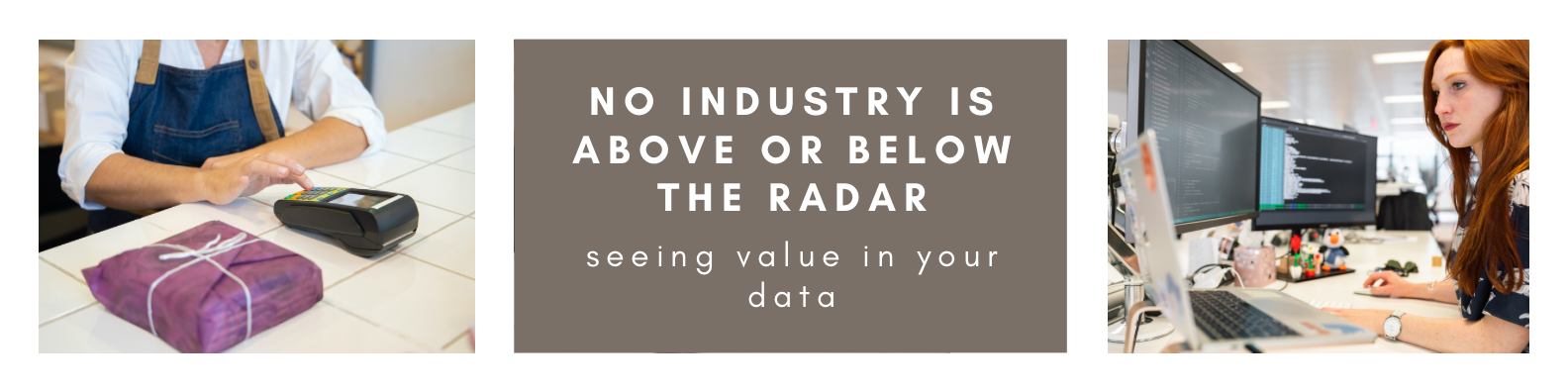
No Industry is Above or Below the Radar: Seeing Value in Your Data

No Industry is Above or Below the Radar: Seeing Value in Your Data

In 2019, few of us were wiser to the change that the world would go through. It seems as though one day we were exchanging ideas and trends about the world of technology in 2020, and in an instant, a health crisis accelerated the rate of change for everyone.

If it is not yet obvious, no industry has gone unscathed.

Organizations in the public and private sector have had to re-evaluate their offering, redefine how they offer their service, and redesign their approach to data. When the big data frenzy settled in, organizations that had a large database, as well as startups, seemed the best fit for data-based techniques and technology. As a result, organizations of that nature invested in protecting the data they had as well as the data they would be collecting in the future.

Your local health office, the restaurant around the corner, the airline that is transporting you to your loved ones for the holidays, and the seamstress who gets you ready for that traditional ceremony all collect valuable data and have likely used it to build a digitalsystem that helped them survive the last two years. Moreover, organizations across industries have been able to achieve better visibility, experience growth, reach new markets, offer more targeted products and services, and track their resources with more clarity by simply using data. The benefits seem exhaustive.

No matter the size, age, or nature of the organization…” how we do things” no longer flies.

But with great opportunity and necessity comes great responsibility. What has always been clear to #cybersecurity experts and practitioners, and is now evident to leaders across industries is that the minute the data they have on their users becomes a part of how they fulfill a mandate or make money, their data becomes worth protecting.

For individuals who are out to prove their technical skills, test the power of their malware, or bad actors, the data in any organization is valuable. And if they see that value, you should too. Cybercrime is the broader umbrella that #datatheft falls under. Malware that compromises data and web-based attacks that place the integrity of your organization in disrepute were estimated to have cost  $2.6 million and $2.3 million respectively. Forbes expects cyber attacks to reach $2.65 billion by 2035, an acceleration that should raise eyebrows for every leader across industries. Any fraction of that is no small change.

No Industry is Above or Below the Radar: Seeing Value in Your Data

In 2020, activity surrounding stolen data increased significantly. Vulnerabilities in retail, health, energy and transport made airwaves and beyond the financial cost, societal disruption and thinning trust are ongoing consequences. Data is being stolen for current use or for future use, so even in instances where data might not yield direct financial benefits, its potential value for use in the future makes it attractive.

Cybercriminals and general threats to your data are always closer than you anticipate. Individuals within the organization or industry that have done the work to evaluate how much that data is worth to the organization or the darkweb sees the value that was not protected by those that hold it.

Data protection is a financial concern, a governance priority, and a key aspect of user relations. Gone are the days of seeing data as only valuable to some industries and not others and most certainly the days of leaving data protection to the discretion of the  IT department are long gone. It is a leader's responsibility to attend to the protection of data, and by proxy, the organization-no matter their technical expertise.

No Industry is Above or Below the Radar: Seeing Value in Your Data

So how can you begin valuing your data?

1️Training your broader organization on the importance of handling all forms of data with precision, confidentiality, and care.

This is important no matter the value of your data-based activity. Prioritize everyone that comes in contact with any aspect of organizationaldata and ensure that their daily activities align with data protection.

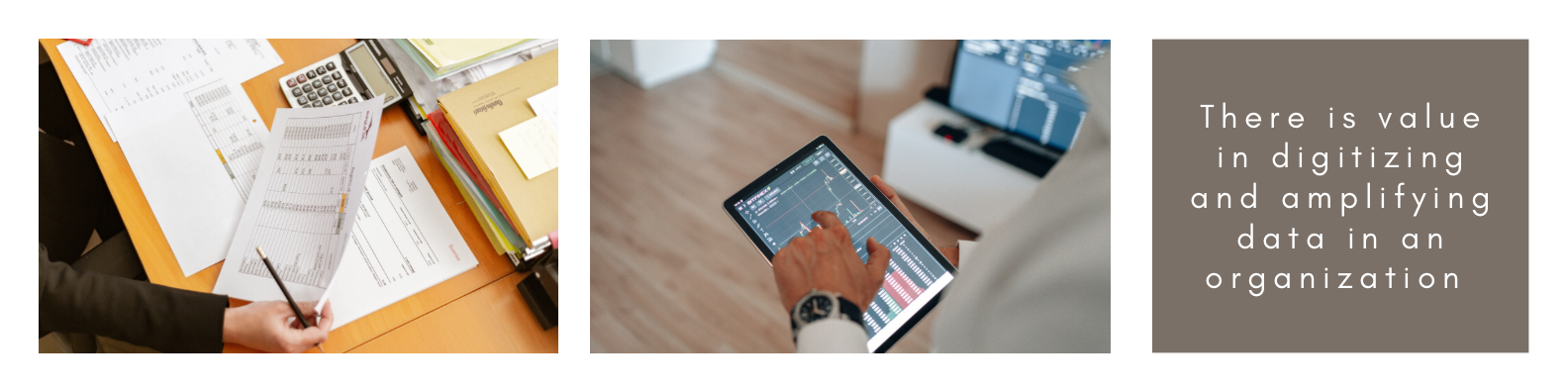
2️Simultaneously employ digitization with data protection software. Seek the assistance of cyber professionals to help you choose and set up the best software.

Do not interrupt the function of your current software and processes. Rather, aim for all systems to work in harmony.

3️Treat access to your data as a privilege and provide access in accordance with those privileges.

4️Continuously evaluate the size and nature of the data that you are collecting and make sure that your software can handle it, processes agree with the changes, and systems are compliant.

5️Conduct a frequent industry analysis to figure out what your data is worth, the various uses it might have, and the value it might bring for your organization. In essence, see the value before cyber attackers do.

The reality is that no matter how sacred, bespoke, or traditional an industry might be, none will be untouched by the digitalmovement. Digitization, data-based products and services, and the influx of users to platforms that collect data about their lives, biometricinformation, and behavior mean the data profile across all industries will be much more valuable.

No Industry is Above or Below the Radar: Seeing Value in Your Data

As a leader, consider the value of your organization’s data, think of what it can do for you as well as the cost of fixing an attack, and then you will appropriately invest in the security of your data.

Understand the value of that data to you and to others and protect it accordingly


Originally Published at Linkedin

No industry is above or below the radar: seeing value in your data
In 2019, few of us were wiser to the change that the world would go through. It seems as though one day we were exchanging ideas and trends about the world of technology in 2020, and in an instant, a health crisis accelerated the rate of change for everyone.
No Industry is Above or Below the Radar: Seeing Value in Your Data

https://bit.ly/3ERA8PQ
https://bit.ly/3vl2TRO

https://guptadeepak.com/content/images/2022/04/AdobeStock_322230356.jpeg
https://guptadeepak.weebly.com/deepak-gupta/no-industry-is-above-or-below-the-radar-seeing-value-in-your-data

Palo Alto Networks CyberArk: The $25 Billion Deal Reshaping Cybersecurity

Deal Overview Transaction Details : Palo Alto Networks announced on July 30, 2025, its agreement to acquire CyberArk for $45.00 in cash...